
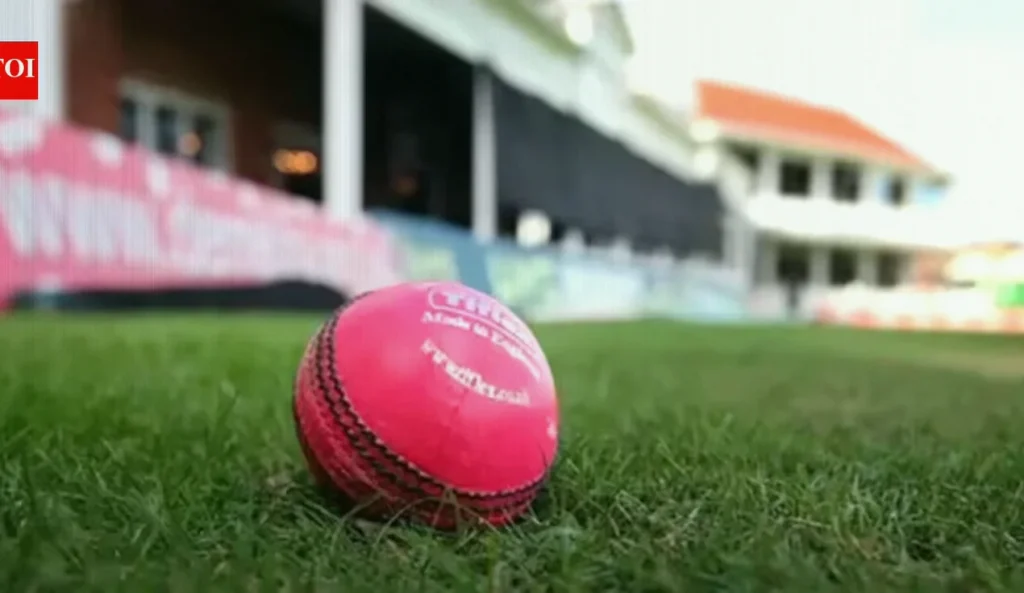
AHMEDABAD: The ICC has announced a trial approach to reduce the recurring problem of bad light cutting short Test matches. The plan is to use a pink ball in such situations, but only if both teams agree, with the goal of protecting more overs and improving the overall viewing experience when conditions deteriorate.
The decision was ratified at ICC board meetings held on the sidelines of the IPL final. It falls under a broader package of reforms spanning playing conditions, governance and the way international and global competition calendars are structured.
Quick facts
- Pink-ball use in Tests will be trialled when bad light becomes a factor, subject to both teams’ consent.
- The ICC says the change aims to maximise playing time and enhance spectator experience under fading light.
- Match officials will be able to access Hawk-Eye data for suspected illegal bowling actions.
- The ICC will work with the MCC on upgraded lighting technology for umpires and venues.
- Permanent adoption of the leg-side wides trial was confirmed; other MCC law updates take effect from Oct 1, 2026.
- In white-ball internationals, head coaches can enter the field during official drinks breaks in ODIs, matching T20I rules.
- A dedicated committee will study how franchise leagues can be better aligned with the international calendar.
- The Women’s Champions Trophy 2027 dates were moved to Feb 14-28.
- A Women’s Emerging Nations Trophy will be piloted in 2026 as a 10-team tournament.
- Qualification rules for the 2028 Women’s T20 World Cup in Pakistan were approved, including a global qualifier for two spots.
- Cricket Canada has been suspended from ICC membership with immediate effect, while its teams remain eligible for ICC events.
Technology and rule tweaks
On the officiating front, match officials will now have access to Hawk-Eye information when assessing suspected illegal bowling actions. In addition, the ICC said it will collaborate with the Marylebone Cricket Club to study lighting improvements intended to assist umpires and venue standards.
The ICC board has also confirmed that the trial related to leg-side wides will be made permanent. Other amendments proposed under the MCC laws are scheduled to be implemented from October 1, 2026.
White-ball operations have not been left untouched either. The ICC approved changes to allow player-coach interaction in international cricket: head coaches will be permitted to enter the field during official drinks breaks in ODIs. The move is designed to bring ODI procedures in line with regulations already used in T20 Internationals.
Franchise cricket under scrutiny
The ICC also flagged concerns about the fast growth of franchise leagues worldwide. To address scheduling and competitive balance issues, it has decided to set up a dedicated committee tasked with examining how these leagues can be aligned more effectively with the international calendar.
ICC chairman Jay Shah said the governing body’s decisions are intended to keep the sport fair, competitive and engaging—covering everything from women’s cricket structures to franchise competitions.
Focus on women’s cricket
In the women’s calendar, the ICC Women’s Champions Trophy 2027 has been moved. Instead of being played in June-July, it will now take place from February 14 to February 28.
The ICC will also pilot a Women’s Emerging Nations Trophy in 2026. It will be staged as a 10-team event, with five Full Members and five Associate Members taking part.
Pathways for the next Women’s T20 World Cup have also been locked in. Qualification for the 2028 edition in Pakistan was ratified, with a 12-team tournament format. Ten teams will qualify automatically: the top eight from the 2026 tournament, the host nation if it is not already among those eight, and the next highest-ranked side.
The remaining two places will be determined through a global qualifier, ensuring more teams have a route to the main event.
Membership update
Separately, Cricket Canada has been suspended from ICC membership with immediate effect due to serious breaches of its obligations. Even with the suspension, its national teams will continue to be eligible to take part in ICC events.
