
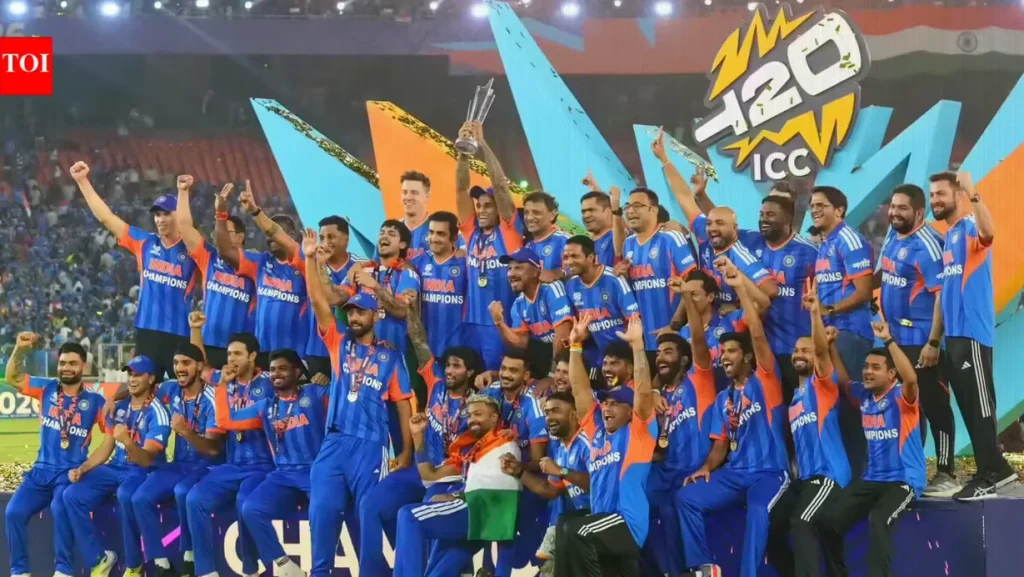
India’s 2026 T20 World Cup triumph wasn’t simply another title on the shelf—it was a campaign forged in uncertainty, steadied by belief, and delivered through a collective surge that refused to be defined by a single name. By March 9, when the lights flared over Ahmedabad, the lingering pain from November 19, 2023 finally felt put to rest. At the Narendra Modi Stadium—where India’s ODI World Cup hopes had previously been dashed by Australia—Suryakumar Yadav’s group laid down a statement performance, defeating New Zealand by 96 runs in the final.
Even with momentum behind them, India’s build-up to the showpiece carried an extra layer of caution. Suryakumar Yadav had not dropped a series since taking over in 2024, yet the World Cup atmosphere demanded respect rather than complacency. In the decisive clash, the squad that carried the weight of a billion hopes in 2026—and the lingering sting of a billion heartbreaks from 2023—showed up with authority, and when the pressure peaked, they answered with composure and conviction.
How India’s defence was powered by multiple match-winners
The story of the title run was never built around one superstar steering the ship. Instead, it unfolded like a series of chapters where different players stepped forward at the exact moments the tournament required them. Suryakumar Yadav, for instance, rescued India against the USA at Mumbai’s Wankhede Stadium, smashing an unbeaten 84 on a tough surface where batting wasn’t meant to come easily. In Colombo, Ishan Kishan took on Pakistan’s spin-dominant approach with a fearless 77, cutting through the tension that always surrounds that rivalry.
Shivam Dube delivered power and purpose as well, bulldozing the Netherlands through a punishing all-round display. Hardik Pandya then swung momentum at crucial stages, contributing with both bat and ball when India needed the game to tilt decisively. Sanju Samson also made the leap from near-miss to knockout impact, producing exhilarating innings against West Indies and England that turned him into a player you could trust when the tournament moved into its most unforgiving phase.
Behind the scenes of those batting surges, Jasprit Bumrah kept finding the moments that separate contenders from champions. When the match threatened to slip into the kind of pressure where hesitation can creep in, Bumrah repeatedly delivered—tight bowling, sharp execution, and timely breakthroughs.
The “transition” mindset under Gautam Gambhir
India’s successful defence carried a clear identity, and it sharpened after Gautam Gambhir took charge following Rahul Dravid’s departure. The word “transition” became common currency in Indian cricket discussions, but Gambhir’s approach was far from timid evolution. He pushed for disruption, for a style that embraced unpredictability, and for decisions that could ignite momentum rather than merely preserve control.
That ideology had already been laid out earlier, when Gambhir described the side as a “gun team” to a young Test group during a spell in England. In the World Cup, the same principle filtered directly into India’s T20 setup. The team leaned into form rather than reputation, treated match-ups as something to exploit rather than something to fear, and moved away from the kind of conservative tournament cricket that can flatten a campaign. What emerged was aggressive, instinct-driven cricket—shaped by the instincts and rhythm associated with the IPL generation.
Suryakumar Yadav became the on-field embodiment of that philosophy. His captaincy reflected calm under chaos, creativity when the plan needed adjusting, and an uncompromising approach when opportunities arrived. The result was a side that looked liberated from the emotional baggage of earlier ICC disappointments—playing with freedom, belief, and clarity.
Off-field turbulence and the tournament’s emotional centre
The World Cup also unfolded against a backdrop of political tension, and it became impossible to separate cricket from the wider conversation. Pakistan’s refusal to play India stood out as one of the competition’s most significant off-field controversies, highlighting how fragile the relationship can be between sport, governance, and geopolitics. Rashid Latif went further, describing India-Pakistan clashes as “the engine that drives World Cup viewership,” underscoring how much those contests shape the tournament’s global pull.
Through every twist, India stayed at the emotional centre of the competition. By the time the final arrived, Ahmedabad no longer felt like a place of burden or memory—it felt like a stage for closure. India’s win over New Zealand was described in the language of inevitability: ruthless, clinical, and ultimately cathartic.
In the end, the dominance was complete. India outplayed New Zealand comprehensively to become the first team to win back-to-back T20 World Cups, and the first to lift the trophy at home. And fittingly, the celebrations belonged to everyone—because the title was built not by one hero, but by a whole squad delivering in unison when it mattered most.
