
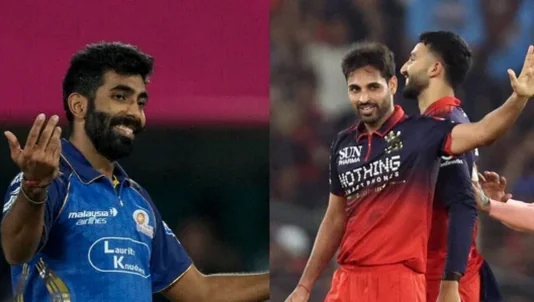
Jasprit Bumrah has long been celebrated as one of T20 cricket’s most reliable strike bowlers, renowned for turning pressure moments into match-winning spells. Yet IPL 2026 has unfolded very differently for the Mumbai Indians spearhead, with the Indian pace ace enduring what looks like one of the toughest stretches of his shortest-format career. After a strong run at the T20 World Cup that lifted expectations for another dominant IPL season, Bumrah has struggled to find early breakthroughs, and the clearest concern is not just output—it’s how opponents are choosing to play him.
Key takeaways
- Bumrah has not taken a wicket in his opening five IPL 2026 matches, which is unusual for a bowler of his impact.
- His current economy rate sits at 8.89, the worst mark in an IPL season where he has played more than five games.
- Umesh Yadav believes Mumbai Indians have been inconsistent with how they deploy Bumrah across overs, including whether he is used in the powerplay.
- Umesh also pointed to a change in batter mindset, saying batters are attacking later and approaching Bumrah with more caution than before.
- Bhuvneshwar Kumar has enjoyed a standout IPL 2026 with Royal Challengers Bengaluru, taking 17 wickets in nine matches and putting pressure on batters from both ends.
- Umesh highlighted that Bhuvneshwar’s clear role—powerplay overs followed by death-overs contributions—has helped him attack with intent.
Bumrah’s IPL 2026 struggles and the shift in how batters approach him
Heading into the IPL season, expectations for Bumrah were naturally high after his impressive T20 World Cup campaign. Many anticipated that he would once again set the tone for Mumbai Indians’ bowling with the control and consistency that have defined his career. However, the tournament has not played out as planned. In the early stages, Bumrah struggled to make an impact and went wicketless in his first five appearances—something that hardly ever happens to a bowler with his pedigree.
While Bumrah has managed to add three wickets to his tally so far, the larger issue has been visible in the way opposing teams have planned their batting. In earlier seasons, even seasoned batters often treated Bumrah with caution, aiming to survive his spells rather than challenge him aggressively. This year, though, batters—particularly younger players—have shown more confidence, displaying greater intent and committing to their plans even when Bumrah is in the attack.
That pattern is reflected in his numbers as well. Bumrah’s economy rate of 8.89 currently stands as his poorest in an IPL campaign in which he has played more than five matches, underlining how difficult this stretch has been for the fast bowler.
Umesh Yadav’s view: inconsistent usage and less pressure for Bumrah
Veteran India pacer Umesh Yadav weighed in on the reasons behind Bumrah’s difficult IPL 2026 run. He suggested that Mumbai Indians have not managed Bumrah’s bowling spells with enough consistency. In Umesh’s assessment, Bumrah is not being given a steady role—sometimes deployed in the powerplay, other times held back from that early phase—leading to a lack of pressure-building rhythm.
Umesh also argued that when Bumrah bowls in situations where wickets are still standing and the batting side is not forced to take risks, he loses the natural wicket-taking pressure that typically comes with his spells. He felt that opponents have started to treat Bumrah as someone they can “play out,” because the match situation is not demanding an immediate acceleration against him. Umesh’s core point was that Bumrah has to manufacture both pressure and wicket opportunities himself, rather than receiving a clear match-up plan from the team.
In his explanation, Umesh pointed to two possible paths that usually help a bowler like Bumrah: either he must be used in the powerplay for one or two overs to create immediate tension, or the captain must structure conditions so that the batting side is forced to score more cautiously. Without that, Umesh felt Bumrah’s wicket-taking becomes harder, especially when batters are approaching him with patience—taking time, not attacking outright, and waiting for opportunities to open up later.
Umesh added that this shift in batter behaviour has become a problem for Bumrah, because it changes the nature of his challenge. Instead of batters trying to survive, they are now choosing to spend overs carefully, allowing Bumrah to bowl but reducing the desperation that often leads to wickets.
Bhuvneshwar Kumar’s rise for RCB and why his role looks sharper
While Bumrah faces a rough patch at Mumbai Indians, another experienced Indian pacer has been thriving in IPL 2026. Bhuvneshwar Kumar has impressed for Royal Challengers Bengaluru despite not being part of India’s national set-up for the past few years. The seamer has carried his form forward with maturity, emerging as a leading contender for the Purple Cap with 17 wickets in nine matches so far.
Bhuvneshwar has repeatedly delivered key breakthroughs in the powerplay, then expanded his impact to the death overs as well. His success is linked to clever variations, disciplined bowling under pressure, and the ability to adjust quickly across different stages of an innings—elements that have contributed to RCB’s strong run throughout the season.
Umesh drew a direct comparison between the two pacers, explaining why Bhuvneshwar appears far more effective this season. He credited Bhuvneshwar’s clarity of role, the backing he receives from the team environment, and the strong bowling support he has had alongside Josh Hazlewood. In Umesh’s view, that combination helps Bhuvneshwar attack with intent from the start and then carry that threat into later overs.
Umesh explained that when Bhuvneshwar begins a match, his spell patterns are well defined: he bowls during the powerplay and then returns in the death phase. That planning, he said, is built around when and where he will bowl, and it allows Bhuvneshwar to know exactly what the team expects from him in those first crucial overs. With the support of partners such as Hazlewood, Umesh felt Bhuvneshwar can apply pressure immediately and force batters into uncomfortable decisions.
New-ball mastery: setting traps rather than simply bowling fast
Praising Bhuvneshwar’s command with the new ball, Umesh emphasized that the veteran’s effectiveness comes from discipline and subtle movement, not just pace. He described how Bhuvneshwar “sets a trap,” mainly by holding a consistent line and length. Umesh’s view was that this forces batters to play at deliveries they would prefer to leave, which then enables the swing to do the decisive work—particularly in the powerplay where early commitments can shape the rest of the innings.
The contrast between Bumrah and Bhuvneshwar, plus Umesh on “Champions Waali Commentary”
Summing up the differences between the two experienced Indian pacers, Umesh reiterated that Bumrah has been left with more responsibility to create pressure and wicket-taking opportunities on his own. He said Bumrah is also contending with a new kind of batter caution, where batters are taking time, not looking to attack his bowling right away, and playing him in a way that reduces the wicket chances that typically come with attacking intent.
In Umesh’s assessment, Bhuvneshwar’s situation is different because he receives clearer chances to attack and take wickets at the right moments, often with the support of bowling partners such as Hazlewood. That clarity, Umesh argued, is a major reason Bhuvneshwar’s campaign has looked sharper than Bumrah’s in IPL 2026.
Umesh also reflected on the JioHotstar “Champions Waali Commentary” feed and how it differs from standard match commentary. He explained that regular commentary focuses primarily on what can be seen during the game, whereas the “Champions” version includes personal views, storytelling, and historical context about players. In his description, it goes beyond ball-by-ball analysis and discussion, bringing in life lessons, experiences from cricket, and the struggles of younger players coming through.
He further noted that the format includes match-situation alerts such as wicket-related cues or warnings around big overs, and it offers predictions grounded in what commentators have learned from their own careers and from IPL experiences. For Umesh, that broader approach is why this style of commentary feels distinct from the usual game-to-game, ball-to-ball method.
“Champions Wali Commentary” is presented as a dedicated Hindi digital feed on CTV, featuring former TATA IPL champions who share never-heard-before stories and insights into how players think as live action unfolds.
