
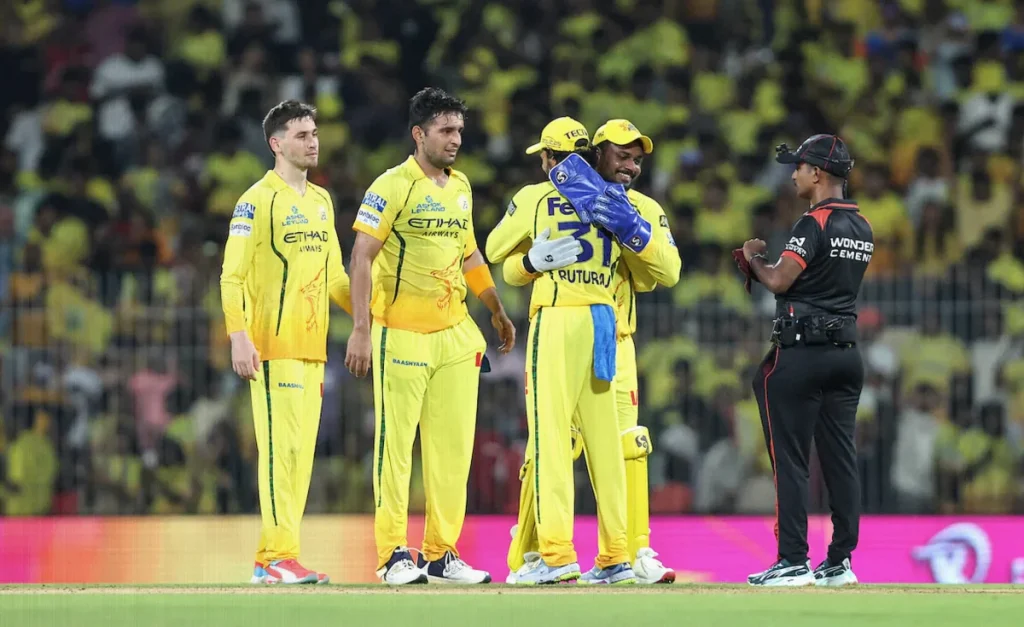
In most IPL seasons, dropped catches and missed opportunities fade into the background once the chase or the result is over. But in IPL 2026, those errors are sitting at the centre of the conversation—because they’re happening often enough to change games, not just swing points in the margins. One notable example came when Karun Nair put down Shreyas Iyer twice on Saturday, a stretch of let-offs that helped fuel what became the highest successful run chase of the day. Delhi Capitals, in that contest, spilled six chances in total, and the momentum steadily slipped away.
Fielding lapses weren’t limited to the usual suspects, either. Washington Sundar, typically dependable in the outfield and around the circle, also failed to hold a straightforward opportunity offered by Virat Kohli. Kohli had been dropped early, then took full advantage—moving quickly through the gears to notch yet another half-century, before steering the chase with a knock that proved match-winning for Bangalore.
IPL 2026: the bigger picture behind the missed chances
- Saturday brought an eye-catching number of fielding failures, with 16 catches falling in total across matches.
- The broader efficiency trend points downward: catch success in 2026 is at 76%, compared with 80% in 2020.
- The decline is not only seen among inexperienced or fringe players; it has also shown up among established performers.
- Even names such as Rohit Sharma and Yuzvendra Chahal have had moments that highlight how concentration and execution are being tested more than before.
That naturally invites a tougher question than “Is someone not good enough?” If technique is in place and the talent level remains elite, then what is driving the mistakes? For Tanveer Jabbar—a former Chennai Super Kings scout and a batting coach for Tamil Nadu—the answer sits in something harder to measure than skill: engagement.
Tanveer Jabbar: engagement and awareness decide the simple chances
Jabbar’s view is that IPL has become increasingly cut-throat, with personal ambitions and short-term gains sometimes eclipsing involvement and team-first awareness during match time. In his assessment, when players become too self-focused, their engagement with the contest suffers—and that, in turn, affects the mental readiness required in the field.
He argues that catching at the highest level is not just about hands; it’s about anticipation and being alert early, so that the difficult part—judging the ball—happens before the moment of contact. While acknowledging that these are elite cricketers who reach the league because of their skills and fundamentals, he stresses that training infrastructure and dedicated fielding coaching exist across franchises. Therefore, he dismisses lights and ground conditions as explanations for dropped chances that should be routine.
His conclusion is direct: the issue is game awareness and commitment to the team cause. He points to the contrast of seeing Karun Nair take stunning catches previously, then still fail to secure easier ones—suggesting the problem is about being switched on rather than lacking ability.
It’s a sharp framing that shifts the focus from technical preparation to temperament. In a tournament where attention is constantly pulled in different directions—by contracts, reputations, and expectations—the simplest skill in cricket can demand the most basic quality: being present.
Mohammad Kaif: the schedule and physical strain add pressure
There is, however, another angle to the same problem, and Mohammad Kaif views it through the lens of workload. For him, the IPL calendar is dense and relentless, leaving little room for recovery beyond what is strictly necessary. He links that reality to shorter sessions, trimmed fielding drills, and the rapid movement of squads from one venue to another.
Kaif also highlights the conditions under which IPL 2026 is being played—at an extreme pace and in extreme heat—where both physical sharpness and mental clarity are placed under strain. In that environment, a single missed chance can decide a match, and with each season, the cost of those errors appears to be rising.
