
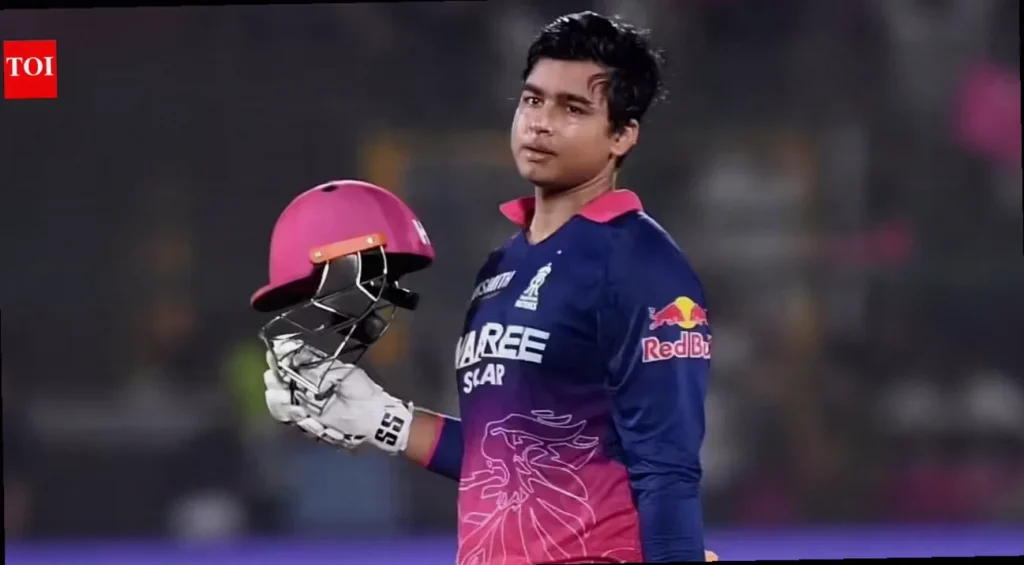
Vaibhav Sooryavanshi, just 15, is quickly turning into one of the IPL’s most talked-about mysteries in IPL 2026—and not only because of the hype. The teenager’s power-hitting is so extreme that it’s already starting to rewrite how people talk about “young impact” in T20 cricket. With each outing, he keeps adding fresh chapters to the record books, and the momentum around the young batter from Tajpur in Bihar’s Samastipur district feels impossible to ignore.
Key takeaways
- Sooryavanshi is 15 and has already become a central talking point of IPL 2026 due to his record-chasing batting.
- Across IPL 2025 and IPL 2026, he has faced elite international bowlers, striking at more than 200 against nearly all of them.
- Among his top-bowler matchups, only Kagiso Rabada has kept his strike rate relatively lower, while most others have been hit hard.
- His scoring is explained by analysts as a mismatch between his scoring zones and the “good length” plans used to restrain batters.
- Sooryavanshi has been dismissed 16 times in the IPL so far, with limited dismissals via bowled and lbw compared to other modes.
Why the IPL spotlight keeps growing
Comparisons have followed Sooryavanshi almost from the start, and the name that keeps coming up is Sachin Tendulkar—particularly because of the intensity of the excitement around him at the same age. But the numbers attached to this teenager from Bihar are being described as something Tendulkar didn’t show at 15, at least not in the same way. The language used around him—“youngest to,” “fastest to,” and “history in the making”—has become a constant theme in coverage during IPL 2026.
Former players and specialists have been urging that the youngster should be considered for an India debut. Others, including Ravichandran Ashwin, have suggested that the timing may not be the main issue—framing it as a matter of “when,” not “if.” The message from that camp is essentially simple: when the moment arrives, people should enjoy what he offers as a performer.
Whenever a batter posts big numbers in the IPL or in domestic pathways and starts to get senior-international attention, the key debate usually follows: can he step up? The concerns are familiar—how he handles international-quality bowling, whether any apparent weakness gets exploited under higher scrutiny, and whether he has the temperament to deal with pressure at the top level. Many have arrived with enormous expectations and then stumbled after the hype. Yet, in Sooryavanshi’s case, the feeling from observers is that he looks cut from a different cloth.
A common theory about T20 batting is that even in the best teams, there tends to be a weaker link: one slot or one bowler that the opposition can target. In a typical batting setup, a batter may face two or three high-quality overseas bowlers, add one or two Indian internationals, and then meet a domestic option—either a young upstart or a journeyman. That is often where teams believe they can gain an edge.
With Sooryavanshi, that pattern appears to break down. The argument being made is that he doesn’t merely survive those matchups—he aces them, as if the usual constraints of T20 batting tactics are being bypassed. The comparison used in the discussion is that it feels like playing with “cheat codes,” where the normal rules don’t apply in the same way.
Taking on the best—then making it look routine
Look at the matchups Sooryavanshi has already handled. In his two IPL seasons so far—IPL 2025 and IPL 2026—he has faced a long list of renowned fast and pace-bowling threats, including Matt Henry, Kagiso Rabada, Mohammed Siraj, Jasprit Bumrah, Trent Boult, Josh Hazlewood, Bhuvneshwar Kumar, Pat Cummins, Arshdeep Singh, Lockie Ferguson, and Marco Jansen.
The standout detail is how few opportunities those bowlers seem to have had to slow him down. Against Rabada, the numbers are described as the closest thing to “unscathed,” with Sooryavanshi striking at 125.00. For every other international bowler in that group, his strike rate has been above 200—except for Siraj, where he still produced an impressive strike rate of 170.00.
Sooryavanshi vs top bowlers in IPL (IPL 2025–IPL 2026)
- Matt Henry: 96 runs off 31 balls, strike rate 316.67, 1 dismissal
- Kagiso Rabada: 108 runs off 86 balls, strike rate 125.00, 1 dismissal
- Mohammed Siraj: 17 runs off 10 balls, strike rate 170.00, 1 dismissal
- Jasprit Bumrah: 135 runs off 50 balls, strike rate 260.00, 2 dismissals
- Trent Boult: 72 runs off 35 balls, strike rate 205.00, 1 dismissal
- Josh Hazlewood: 184 runs off 40 balls, strike rate 450.00, 4 dismissals
- Bhuvneshwar Kumar: 39 runs off 19 balls, strike rate 205.26, 1 dismissal
- Pat Cummins: 84 runs off 20 balls, strike rate 420.00, 2 dismissals
- Arshdeep Singh: 36 runs off 13 balls, strike rate 276.92, 2 dismissals
- Lockie Ferguson: 16 runs off 3 balls, strike rate 320.00, 1 dismissal
- Marco Jansen: 23 runs off 10 balls, strike rate 230.00, 1 dismissal
It isn’t only that he attacks top bowlers—he also appears to dismantle the reputation that bowlers arrive with. The coverage points to a lack of “sighters” and an almost instant intent, as if pedigree doesn’t matter once the ball is released. Examples are highlighted: a first-ball six off Bumrah; another six off Boult; and similar fearless treatment of Cummins. Hazlewood’s first over is described as 4, 4, 4, 6 against Sooryavanshi. Bhuvneshwar Kumar is said to have been hit for four from his very first delivery to him, while Arshdeep Singh was greeted with 6, 4, 4 in his opening over. Even Sunil Narine’s craft and Siraj’s pace didn’t change the approach. When Ferguson bowled that “other night,” Sooryavanshi reportedly struck 4, 4, 6 in the first burst.
Across all the bowlers he has faced so far in the IPL, the overall picture is portrayed as even more striking. Only Mohsin Khan and Sunil Narine are mentioned as opponents who have managed to keep a lid on him. Rashid Khan and Prasidh Krishna are described as having been more balanced in their outings against the youngster.
Sooryavanshi vs the rest of the bowlers in IPL (IPL 2025–IPL 2026)
- Khaleel Ahmed: 10 runs off 6 balls, strike rate 166.67, 1 dismissal
- Anshul Kamboj: 20 runs off 9 balls, strike rate 222.22, 1 dismissal
- Noor Ahmed: 38 runs off 12 balls, strike rate 316.67, 1 dismissal
- Ashok Sharma: 11 runs off 6 balls, strike rate 366.67, 1 dismissal
- Prasidh Krishna: 88 runs off 11 balls, strike rate 100.00, 1 dismissal
- Rashid Khan: 13 runs off 10 balls, strike rate 130.00, 1 dismissal
- Deepak Chahar: 0 runs off 2 balls, strike rate 0.00, 1 dismissal
- Hardik Pandya: 22 runs off 10 balls, strike rate 100.00, 1 dismissal
- Shardul Thakur: 25 runs off 12 balls, strike rate 177.78, 1 dismissal
- Abhinandan Singh: 15 runs off 3 balls, strike rate 300.00, 1 dismissal
- Krunal Pandya: 8 runs off 12 balls, strike rate 200.00, 2 dismissals
- Tim David: 13 runs off 4 balls, strike rate 325.00, 1 dismissal
- Praful Hinge: 30 runs off 10 balls, strike rate 300.00, 1 dismissal
- Sakib Hussain: 30 runs off 10 balls, strike rate 300.00, 1 dismissal
- Shivang Kumar: 21 runs off 6 balls, strike rate 350.00, 1 dismissal
- Vaibhav Arora: 19 runs off 8 balls, strike rate 237.50, 1 dismissal
- Kartik Tyagi: 15 runs off 9 balls, strike rate 166.67, 1 dismissal
- Cameron Green: 8 runs off 2 balls, strike rate 266.67, 2 dismissals
- Sunil Narine: 78 runs off 8 balls, strike rate 87.50, 1 dismissal
- Varun Chakaravarthy: 12 runs off 5 balls, strike rate 240.00, 1 dismissal
- Prince Yadav: 8 runs off 5 balls, strike rate 160.00, 1 dismissal
- Mohsin Khan: 0 runs off 6 balls, strike rate 0.00, 1 dismissal
- Digvesh Rathi: 8 runs off 5 balls, strike rate 160.00, 1 dismissal
- Harpreet Brar: 8 runs off 3 balls, strike rate 266.67, 1 dismissal
Not reckless—built on a mismatch
To some viewers, Sooryavanshi’s start can look like an early-game assault, a batter going after shots before the contest is properly formed. But the argument here is that it’s not random. His mindset is described as clear: he has permission to attack from the outset, and he backs it with both power and a strong sense of length. Instead of playing the bowler’s style, he is said to be playing the ball itself.
There is also a more technical explanation that helps account for why bowling to him becomes difficult. The central idea is that it is simply tougher to stop him with the “standard” areas that usually restrict batters. As cricket data analyst Himanish Ganjoo was cited on an ESPNcricinfo podcast, for the average batter the strike rate on good length deliveries is around 130, while for Vaibhav it runs above 200. That means the very zone bowlers often rely on to control scoring becomes a scoring lane for him.
And if bowlers stray slightly and land the ball fuller, things apparently get even harder. The quote used is that in the slot he is striking at 400.00. That is why, in match terms, it can feel like there is no safe option: attempt the good length and he still scores freely; try to adjust and he punishes the alternative.
What sets him apart further is not just where he hits, but how often he finds it. Ganjoo is described as noting that Sooryavanshi connects with good-length balls far more frequently than other batters, and he also pulls from shorter lengths more often than usual—precisely the area where many players struggle. The reading is that he detects length early, gets into position quickly, and has the bat speed to keep launching the ball even when it isn’t delivered on the “perfect” spot. His high backlift and quick hands are said to allow him to generate power from a range of starting positions.
Most hitters have at least one plan that tends to trouble them—short-pitch deliveries, back-of-a-length, or swing. With Sooryavanshi, those usual tactics are portrayed as not working in the normal way. That’s why he’s being described as different from everyone else.
Dismissing him has also looked challenging for bowlers in terms of pace rushing. The article highlights that he rarely gets hurried and seldom misses the line. Out of 16 dismissals so far, he has been bowled twice and dismissed lbw once. Two of those dismissals are also said to have happened after he had already reached 101 and 103.
From a single-digit perspective, four dismissals are mentioned where he fell for under 10. Only one of those is singled out as particularly notable: his dismissal against SRH’s Praful Hinge in IPL 2026. In that case, he appeared to be beaten by extra bounce while trying to swipe towards cow corner. The remaining three single-digit dismissals are described as coming from his own false shots, which—at least up to this stage—remain uncommon.
For fans wanting more, follow the latest IPL Live Score, IPL news, the IPL Schedule, the IPL Points Table, and watch the race for the IPL Orange Cap and IPL Purple Cap.
