
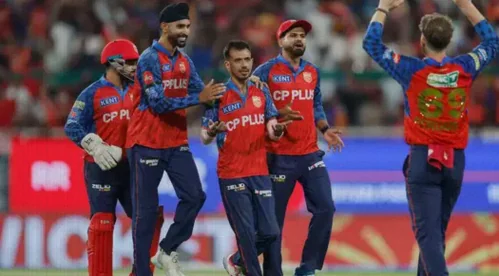
Punjab Kings (PBKS) introduced a fresh Playing XI for the first time this season, but their campaign’s momentum hit a wall as Rajasthan Royals (RR) chased down the highest total at New Chandigarh to register their win and end PBKS’s seven-match unbeaten run as tournament leaders. With the pitch largely favouring batters, PBKS’s bowling—capable of brilliance at times—struggled to execute consistently, and captain Shreyas Iyer admitted the team were below par on what he described as a “slow and tacky” surface. RR’s chase was effectively sealed by a match-winning 77-run partnership off just 32 balls between Donovan Ferreira and Shubham Dubey, with the duo taking the game away after Rajasthan had steadied things in the middle overs.
Key takeaways
- PBKS handed a different Playing XI for the first time in the season, yet suffered their opening defeat of the campaign.
- Rajasthan Royals chased down the competition’s highest score at New Chandigarh, ending the table-toppers’ seven-match unbeaten streak.
- Shreyas Iyer said PBKS were “below par” in bowling execution on a “slow and tacky” wicket, particularly in handling slower ball plans, pace-off deliveries and yorkers.
- PBKS bowling coach James Hopes called the loss a “reality check” and insisted there was no need for panic after just one defeat.
- Lockie Ferguson returned figures of 0 for 57 in his four overs, while Arshdeep Singh finished with 1 for 68—the second-most expensive spell by a PBKS bowler in IPL history.
- A 77-run stand in 32 balls between Donovan Ferreira and Shubham Dubey was the decisive factor, helping RR complete the chase with four overs remaining.
Iyer and PBKS: execution mattered on a slow surface
Punjab’s bowling has fluctuated throughout the season, a trend Iyer linked to the number of batting-friendly tracks they have encountered. After the loss, the PBKS captain accepted that their execution didn’t match the plan on a wicket he felt was still “slow and tacky.” He said they fell short with the ball, especially when it came to the details of execution.
Iyer explained that PBKS had targeted bowling options designed to disrupt the batting rhythm—slower deliveries to take pace off, yorkers, and a broader slower-ball approach. However, he believed they didn’t land those tactics often enough in the right moments.
He also highlighted the turning point in the chase: Rajasthan’s middle-overs partnership, with Ferreira and Shubham Dubey making vital contributions when the pressure was rising and then accelerating at the end to take control.
Still, Iyer argued that in T20 cricket the margin for error narrows continuously, and teams adjust quickly once set. In his view, many batters change gears rapidly when they come in during the IPL, making bowlers’ planned pathways harder to sustain.
“If you have a certain plan set, when you execute it well, you come out triumphant,” Iyer said, adding that on this occasion it simply “wasn’t our day.”
Hopes on regrouping, Ferguson’s role and why panic isn’t required
PBKS bowling coach James Hopes described the defeat as a “reality check,” but was firm that it should not trigger any panic. He stressed that the side were flying—coming into the match with a run of wins—and that losing one game is not unusual in a tournament that runs across weeks and demands constant adaptation.
Hopes pointed to the immediate next steps: PBKS have several days to regroup before playing Gujarat Titans (GT), with training sessions used to fix issues and identify the best combination for the conditions and opponents ahead.
He also defended the decision to include Lockie Ferguson, who returned 0 for 57 from his four overs. Hopes said the selection was not an “experiment,” explaining that Ferguson had mainly been unavailable due to paternity leave and that he had now returned ready after time away. He added that Ferguson’s recent cricket included the World Cup and a short series against South Africa, suggesting the bowler was prepared for the workload once available.
Hopes reiterated that Ferguson is a “world-class bowler,” and while the match might not have been his best night, the team expected he would eventually get into the tournament and chose to “pull the trigger” when the opportunity came.
Looking at the bigger picture across the two-month tournament, Hopes maintained that adaptability tends to decide who reaches the business end. He compared PBKS’s ability to read conditions and adjust with the way other teams, such as RCB, have become strong at responding to different surfaces. He believed that beyond one or two matches, PBKS have faced conditions that suit batters and expected that trend to continue through their next five games.
With that in mind, he said the key was to keep working on skills, execution at the end of matches, and fine-tuning small areas. Hopes also underlined the timing of the setback—“game eight”—and noted that the dressing room should not spiral into “doom and gloom” after the side’s first defeat of the season.
Why the chase swung: Ferreira and Dubey’s rapid 77-run stand
A major factor behind PBKS’s costly night with the ball was the partnership that shifted the chase. Rajasthan rebuilt and then surged through a 77-run stand off 32 deliveries between Donovan Ferreira and Shubham Dubey, which ultimately allowed RR to finish with four overs to spare after slipping during the middle overs.
RR head coach Kumar Sangakkara singled out Dubey’s impact, praising the composure he showed after coming in as an Impact Sub. Sangakkara said the role itself is difficult because there’s uncertainty about whether the player will bat, and yet Dubey arrived and kept his focus, bringing the game to Rajasthan’s advantage.
He also praised Ferreira for closing out the chase, describing Dubey’s momentum and Ferreira’s control as part of a collective effort. Sangakkara noted that it’s challenging to play away in New Chandigarh against table-toppers, but he felt the win was well earned.
In addition, Sangakkara referenced “Riyan’s small innings” as exactly the kind of boost needed to bring momentum back in RR’s favour, before Dubey and Ferreira completed the job together.
