
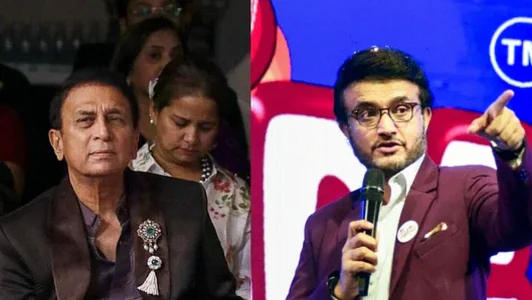
Run-scoring has become the dominant storyline in the IPL 2026, and with games repeatedly tilting towards batters, the question is growing louder: where do bowlers get their breathing room in modern T20 cricket? Gujarat Titans all-rounder Jason Holder recently weighed in on one possible fix, arguing that longer boundary distances could help rebalance contests. Former India captain Sunil Gavaskar, meanwhile, pushed for a more targeted change—adjustments to how wides are interpreted when a bouncer barely clears a batter’s head.
Quick facts
- IPL 2026 has seen frequent high-scoring matches, raising concerns about batter dominance in T20 cricket.
- Gujarat Titans all-rounder Jason Holder suggested increasing boundary rope length to bring bowlers back into the contest.
- Sunil Gavaskar called for lawmakers to restore balance by giving bowlers more leniency on certain wide-ball calls.
- Gavaskar said wides should not be called for a bouncer that clears the batter’s head by a minimal margin.
- He proposed allowing a fast bowler a one-foot margin above the head in the batter’s normal stance for a bouncer.
- Gavaskar also urged Sourav Ganguly, chair of the ICC Men’s Cricket Committee, to consider redefining the wide bouncer.
Gavaskar argued that the current approach effectively handicaps pacers in a format that already plays to the batting side. His central point was simple: when a bouncer goes just over a batter’s head, the call for a wide should be reconsidered, because it leaves bowlers with fewer workable options at the top end of the innings. In his view, the law as it stands is making it even harder for quicks to execute their variety of short-pitched deliveries.
He described the situation as being akin to putting a fast bowler in a restrictive box—“one hand tied behind his back,” in his words—because the rule punishes deliveries that are only marginally above the batter’s head. Gavaskar added that this comes at a time when boundary lengths have been shortened, even though there is room to push them back. Put together, he believes the changes leave bowlers short-changed, and the latest interpretation that treats a ball as a wide if it goes above the batter’s head in the usual stance only deepens the disadvantage.
In his suggested tweak, Gavaskar said the definition could be adjusted to allow a small buffer—roughly the length of the bat handle—above the head while the batter is in their stance. That, he argued, would offer fast bowlers some relief and encouragement to fire more frequently with bouncers that previously would have been flagged as wides. The aim, as he framed it, is not to remove the challenge for batters, but to restore a fairer contest between pace and timing.
Gavaskar’s call to Sourav Ganguly
Gavaskar then directed his appeal to Sourav Ganguly, currently the Chair of the ICC Men’s Cricket Committee. He asked Ganguly to come forward with a method to provide pacers with extra leeway and to revise the way a wide bouncer is defined. The former India batter stressed that a quality performer should always be able to handle a bouncer, noting that it is generally around the height of a bat handle above a batter’s normal stance.
He also referenced the earlier introduction of the bouncer into the format under ICC oversight, saying that when he took charge of the ICC Cricket Committee, the decision was to bring it back with a restriction—one bouncer per over per batter. Gavaskar claimed the change helped bring back an important weapon for bowlers and reduced the need for batters to be constantly shielded from short-pitched bowling. He argued that the logic of cricket should apply both ways: if batters are not prevented from playing any particular shot, then bowlers should not be too heavily restricted from attempting the different variations they are trained to deliver.
Closing his argument, Gavaskar reiterated that a batter who is truly good should be able to score off a bouncer, which he again described as being at about bat-handle height above the batter’s typical stance. He suggested that such a balance would make the contest more even in a T20 world where even elite fast bowlers can find themselves under heavy pressure. Finally, he urged Ganguly to spare a thought for the bowling fraternity when the next ICC Cricket Committee meeting is convened, pushing the case for a small but meaningful adjustment to how wides are called on bouncers.
