
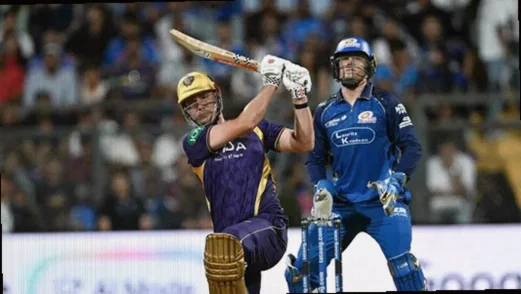
With the IPL still finding its groove, Cameron Green has quickly become an easy talking point for Kolkata Knight Riders fans and critics alike. The catch is the price tag: ₹25.20 crore is the sort of investment that gets judged in real time, not after the tournament settles. Through his opening three outings for KKR, Green has managed 18, 2 and 4 with the bat, and he has not bowled yet—so the frustration around his role has only intensified game by game.
But the same factors that have fuelled the noise are also why KKR can’t afford a knee-jerk reaction. Removing Green now may calm the anger outside the dressing room, yet it could trigger a bigger set of problems inside the squad. KKR aren’t simply dealing with a batter in temporary discomfort; they are also protecting an auction strategy, managing team balance, and trying to unlock a high-upside all-rounder whose value can shift quickly once one part of his game returns.
Quick facts
- Cameron Green is KKR’s overseas all-rounder signed for ₹25.20 crore.
- In his first three IPL innings for KKR, he has scored 18, 2 and 4.
- He has not bowled in IPL matches so far for KKR.
- KKR have earned only one point from their first three matches; their first two games were lost, and the Punjab Kings match was washed out.
- Green’s IPL career totals: 731 runs in 32 matches, average 36.55, strike rate 154.22, including one century and two fifties.
- In 2023 for Mumbai Indians, he scored 452 runs at an average of 50.22 with a strike rate of 160.28.
- Reports suggest Green has resumed bowling in nets and could be expected to bowl against Lucknow Super Giants.
The money argument: why “panic” can be costly
It would be too simplistic to say KKR must keep Green in the XI just because he was bought for ₹25.2 crore. Teams shouldn’t treat auction spending as a shield that keeps underperformance in place. Still, the figure matters because it changes the threshold for when a franchise should abandon a plan. When a side pays that kind of amount for an overseas all-rounder, it isn’t only buying batting output—it’s buying flexibility, role coverage, and the ability to solve multiple match problems at once.
That’s why KKR can’t frame Green’s situation as though he’s merely another top-order batter with a rough start. If they drop him immediately, it would amount to conceding early in the season that a core bet from their auction might have to be shelved before it has properly played out. In most cases, franchises only make that kind of call when they are certain there’s a clearly better option ready to replace the original decision. Right now, the more likely danger is overreacting to an early slump rather than making a properly calculated adjustment.
KKR’s season context adds pressure to every selection
KKR’s start has sharpened the stakes. They lost their first two matches, and the clash with Punjab Kings was abandoned without a result, leaving them with just one point from three outings. In this situation, teams often convince themselves that they need to “refresh” things, but the reality is that they usually need fewer emotional changes, not more. A hasty call on Green could create the appearance of action while doing little to fix the larger issue of squad balance.
Green the batter: the case for patience isn’t imaginary
One of the easiest traps in this debate is to portray Green as a reputation-driven T20 name whose abilities are suddenly collapsing under pressure. The data doesn’t support that. Even if you temporarily set bowling aside, Green’s franchise record gives KKR reason to wait. His IPL output stands at 731 runs across 32 matches, with an average of 36.55 and a strike rate of 154.22. He has also produced one century and two fifties in the competition.
More importantly for KKR, his most recent full high-end season has already been proven. In 2023, playing for Mumbai Indians, Green recorded 452 runs at an average of 50.22 and a strike rate of 160.28. That matters because KKR aren’t gambling on an unknown quantity that must reveal hidden value from scratch. They’re backing a player who has already demonstrated he can be a serious contributor with the bat in the IPL.
Yes, there are legitimate questions about where he fits in the batting order. Kevin Pietersen’s criticism of Green’s suitability at No. 3 landed because that spot demands consistency and a certain kind of rhythm—particularly for players who are still finding their timing and have not yet started compensating with overs. Even so, criticism of a role doesn’t automatically equal proof that the player has nothing to offer. Green may not be the perfect “pure” No. 3 wrecking ball, but he remains too effective a T20 option to write off after only a small sample of matches.
The bigger point: KKR need impact, not immediate validation
This is where the argument for quality outweighs the argument for outrage. KKR don’t need one innings to justify ₹25.2 crore. What they need is for Green to become usable, influential, and gradually more multi-dimensional within their plans. Players with his ceiling often deserve one more game, one more tweak in role, and another realistic attempt before a decision is final. That logic becomes even more relevant early in a tournament, when the evidence base is still thin and the broader track record carries more weight than a short-term dip.
Bowling could change everything
It’s also why dropping him now has become harder to justify. Recent reporting suggests Green’s situation has shifted. After earlier doubts about his bowling ability, he has reportedly returned to work in the nets, with claims that he bowled three overs at full intensity during training. Tim Southee has also indicated that Green is not far away, and there is now information pointing to the possibility that he could bowl against Lucknow Super Giants.
If that expectation holds, the entire selection equation changes overnight. KKR would no longer be carrying an expensive batter whose returns have been limited. Instead, they would be getting what they paid for in the first place: an all-rounder who can affect the match in two disciplines and is finally moving toward the role he was purchased to play. That context also explains why Sunil Gavaskar’s criticism struck a nerve—if Green isn’t bowling, KKR’s justification becomes much weaker. But once he starts contributing with the ball, even in small bursts, team balance begins to look more coherent again.
So what should KKR do now?
The conclusion is straightforward: this isn’t the moment for KKR to blink. Green has indeed been underwhelming, and the pressure on him is understandable. Still, there is a difference between recognizing disappointment and surrendering too soon. KKR can’t afford to carry dead weight indefinitely, but they also can’t walk away from one of their biggest bets right before that bet has a realistic chance to complete its first meaningful turnaround.
On the evidence currently available, supporting Cameron Green for a bit longer isn’t blind faith. It is the more sensible gamble — especially if the next step involves him taking the ball and giving KKR the all-round balance they were targeting.
