
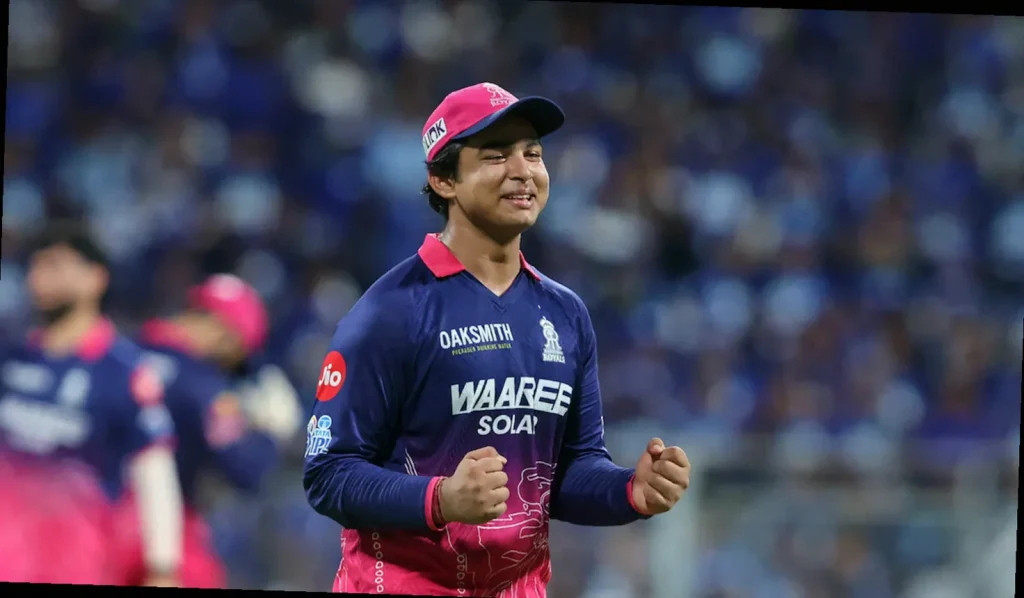
Former India batter Sanjay Manjrekar has voiced concern about how the Impact Player rule may be shaping the development of Vaibhav Sooryavanshi in the current IPL campaign. The 15-year-old batting sensation has quickly become one of the tournament’s most eye-catching performers, delivering aggressive innings that have helped Rajasthan Royals secure a place in the IPL 2026 Playoffs. Across 14 matches, Sooryavanshi has accumulated 583 runs and sits among the leading run-getters of the season. Yet as his rise has accelerated, Manjrekar believes the bigger picture of his growth—especially his work in the field—could be getting short-changed.
Manjrekar made the remarks on Sportstar’s Inside Edge podcast, arguing that the rule’s structure can limit a young player’s all-round exposure. He pointed to how the system often allows teams to keep Impact Player usage focused on batting needs, which can reduce a player’s time on the field, and he used Rohit Sharma as a familiar benchmark. According to Manjrekar, Rohit’s recent outing underlined how a batter can deliver a brief spell of impact and still receive the same match remuneration, even if the on-field workload is minimal.
“I was just thinking about this when I saw Rohit Sharma in the last game. He scored 22 runs off 15 balls. His entire contribution lasted 15 deliveries, yet he’ll still receive the full match fee or whatever comes with it. I’m not someone who likes focusing too much on money, but when there’s easy money to be made for very little effort, you have to start questioning that model. That can never be a sustainable, long-term formula for success,” Manjrekar said.
He then sharpened his argument, calling for an end to the Impact Player concept in its current form. In his view, the rule does more than influence tactics—it changes what fans and coaches end up assessing in players. Manjrekar suggested that the format can end up showcasing only one dimension of a cricketer’s ability, rather than forcing a complete evaluation of skills across batting, bowling and fielding.
“The more I think about it, the more I feel we need to do away with the Impact Player rule for this very reason. Is that really what we want to see about Vaibhav Sooryavanshi? To only see one side of his game? A cricketer should be someone who contributes across disciplines. Earlier, we admired players like Inzamam-ul-Haq not just for their batting, but because we also saw the other side of them in the field. That helped you properly assess and understand the player,” he added.
While praising the upward trajectory of Sooryavanshi’s batting, Manjrekar maintained that fielding deficiencies might not get addressed with the urgency they deserve if a player is not routinely required to take part in defensive overs and high-pressure catching situations. His concern is that the rule can quietly reduce the intensity of practice and match-time learning that comes from being fully involved throughout a game.
To illustrate that the league can still produce winners even with the Impact Player approach, Manjrekar acknowledged that India had won the last two T20 World Cups despite the rule. He also referenced Shivam Dube as an example of a player who can contribute without bowling and still add value to team outcomes. However, even with those caveats, Manjrekar argued that the sport should not be moving toward a model where players can arrive, make a quick impression, and then step away from the remainder of the contest.
“India won the last two T20 World Cups despite the Impact Player rule. Yes, someone like Shivam Dube can contribute without bowling and still help the team succeed. Those things are happening. But for me, a cricketer shouldn’t just walk in, play a quick cameo, and then sit back and relax,” he said.
Manjrekar’s overarching message was that cricket should test players more comprehensively, rather than rewarding narrow, isolated contributions. He said that if a player is known for bowling, audiences should still be able to judge how that same player performs in the field, not just how many overs they deliver.
“I want the game to test players more thoroughly. If someone is a good bowler, I don’t just want to see him bowl four overs. I want to see how he fields as well. The game should examine every aspect of a player, not just one skill in isolation,” he added.
