
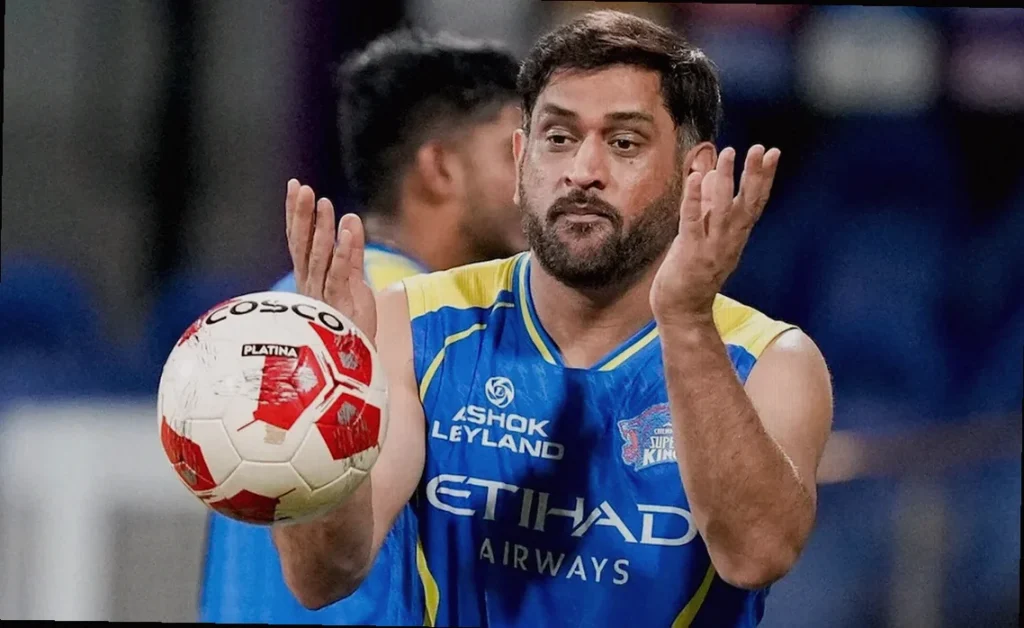
Chennai Super Kings remain one of the best-known franchise brands in global T20 cricket, supported by a massive fan base. The side’s standing was largely built on the five IPL titles they collected between 2010 and 2023. However, their recent stretch has been unsettled: the last two editions and the current season have all brought uneven results. Led by Ruturaj Gaikwad, CSK are still searching for consistent momentum, having already lost four of their six matches so far. Gaikwad’s batting has also struggled for rhythm, with only one innings above 25 runs in six outings.
Key takeaways
- CSK’s IPL title legacy includes five trophies won from 2010 to 2023, but recent seasons have been difficult.
- In the current campaign, the franchise has lost four matches out of six.
- Ruturaj Gaikwad has managed scores of more than 25 in only one of his six games.
- Sanjay Manjrekar questioned CSK’s decision-making around leadership and team planning affecting Gaikwad’s form.
- MS Dhoni is still sidelined in IPL 2026 with a calf injury, and his return timeline is unclear.
- Manjrekar believes even Dhoni’s eventual comeback may not automatically ease CSK’s challenges.
Manjrekar pins the blame on CSK’s decision-makers
Former India cricketer Sanjay Manjrekar attributed Gaikwad’s poor run to the way CSK’s management handles key calls. In his comments on Sportstar’s Insight Edge podcast, he said the responsibility should fall on those who own the franchise and on the people who take major decisions. Manjrekar argued that Gaikwad, before he became captain, looked “phenomenal” at the top of the order, implying the captaincy and surrounding circumstances have not helped him find the same impact.
He also highlighted the uncertainty around MS Dhoni’s role, questioning how CSK managed the situation. The former batter suggested that the handling of whether Dhoni would play and whether he would captain was not done well enough, and he connected this to what he described as a wider cultural tendency that can seep into cricket. Manjrekar claimed it goes beyond simply having a loyal fan following for Dhoni, describing it as “sycophancy” that can shape reactions and narratives in the sport.
A personal Dhoni-focused incident and the effect of fan sentiment
Manjrekar recalled an episode from his own experience to illustrate what he felt was a warped response from supporters. He said there was a moment when Dhoni attempted to get his bat near the crease, and it looked to him like he was short of the required position. Manjrekar noted that he felt it should have resulted in a run-out, but fans reacted angrily when he said so, which he interpreted as fans losing sight of the bigger picture.
That recollection was used to underline his broader point about how public opinion can influence the way cricket decisions and discussions are framed, especially when a particular player commands strong emotional support.
Dhoni’s IPL 2026 absence and what it means for CSK
Dhoni has not played a match in IPL 2026 yet because he is dealing with a calf strain. There remains no clear indication of when he will return to action. Manjrekar suggested that even when Dhoni comes back, CSK’s complications may not disappear, pointing out that the team still has to plan how he fits into the XI and how his role affects the rest of the batting order and on-field balance.
He said there is a practical challenge in using Dhoni effectively at this stage, implying that it is becoming harder for him to deliver consistently. Manjrekar referenced a pattern from earlier in which Dhoni would come down the order and face only a handful of deliveries, while media coverage would exaggerate the brief spell—framing it as an “innings” even though it lasted only four balls. In Manjrekar’s view, that approach is not sustainable as a long-term solution, and it is unlikely to work as a recurring tactical plan.
Concluding his thoughts, Manjrekar added that he cannot claim to know how Gaikwad feels when Dhoni is on the field but not captaining, compared to situations where Dhoni is not present and Gaikwad has sole responsibility.
