
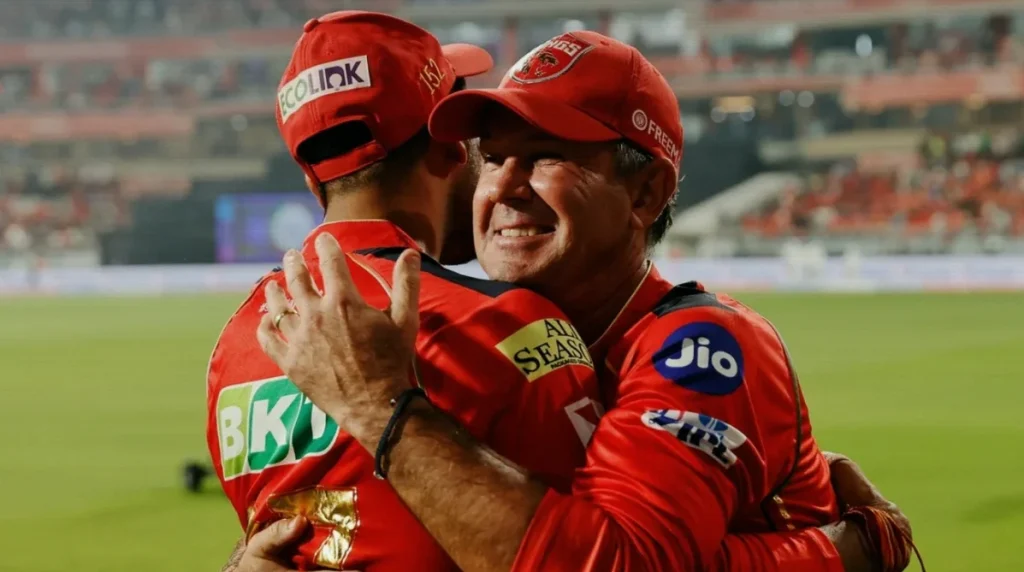
For many Indian cricket supporters who grew up in the early years of the 2000s, Ricky Ponting wasn’t just disliked—he was almost expected to be. He seemed to arrive in India’s toughest moments with a calm, unwavering composure, chewing through pressure like it was nothing, only to then go on and pick apart the opposition with ruthless accuracy.
Whenever Ponting stepped out to bat against India during that decade, there was a familiar tension in the stands and living rooms alike. The feeling wasn’t simply that Australia might win; it was that something uncomfortable was likely to happen again. More often than not, the ominous expectation proved right—runs kept coming, Australian victories piled up, and irritation turned into something closer to resentment.
Some of that reaction was shaped by perception. Australia, under Steve Waugh and later Ponting, carried itself with a kind of ruthless efficiency. Yet Waugh found a warmer reception in India, aided by charitable initiatives and public appearances that made him easier to like. Ponting’s era, in contrast, carried a different emotional signature. Indian audiences often read his body language and demeanour as smug, and that interpretation stuck.
Today, though, the way Ponting is viewed in Indian cricket circles looks almost like a different story. He no longer fits the mould of the hyper-competitive overseas “villain.” Instead, he is now among the most respected international figures in the country’s cricket world.
To understand the scale of that shift, you have to return to how fans of that generation remembered him. Ponting was the man who pushed back on disputed catches at a time when DRS wasn’t part of the routine. In the Sydney Test in 2008, an umpire asked whether Michael Clarke had taken a controversial catch off Sourav Ganguly. Ponting reacted with an unmistakable finger raised, and what followed became a symbol of win-at-all-costs thinking. Television replays shown across Indian households suggested the dismissal might not have been clean. The anger spilled beyond commentary—effigies were burned in New Delhi, and mistrust took deep root.
Even earlier, the 2003 World Cup final in Johannesburg left a scar that many supporters still carry. Ponting crushed India’s hopes with an innings that felt almost impossible to process in the context of a World Cup decider: an unbeaten 140 from 121 balls. For a time, the knock was so extraordinary that it fed conspiracy theories. Stories that there was something “special” inside his bat spread rapidly, and the odd rumour became part of cricket folklore. The real takeaway for many Indian fans was simple: they struggled to make sense of that level of strokeplay.
Another fuel for the rivalry came from Ponting’s long-running contest with Harbhajan Singh. The verbal sparring stretched across years, both on and off the field, and the pair’s battles in Tests produced ten dismissals. During the 2008 tour in Australia, the atmosphere became even more combustible. Harbhajan sat at the centre of the Monkeygate racism controversy, while Ponting also backed his own player Andrew Symonds amid the public back-and-forth that followed.
Older flashpoints, too, were absorbed into the wider mythology around Ponting. In 1998, there was a reported late-night altercation outside a nightclub on Park Street in Kolkata, a moment that helped cement the broader image people already had of him. Then in 1999, when he was knocked out cold in a bar in Sydney and subsequently dropped from the ODI side, it further strengthened the narrative—especially among those who believed he was always on the lookout for trouble.
But beyond individual controversies involving Ponting and India, there was a more straightforward reason his unpopularity endured: he kept winning everywhere. During his Australia career, the team recorded 376 victories in 559 international matches across formats, translating to a win percentage close to 68%. In cricket terms, it was dominance on a scale that rarely allows grudges to fade quickly.
Sport has a peculiar way of handling serial winners. Fans may tolerate arrogance—sometimes even when it’s perceived rather than real—if it comes with vulnerability or the possibility of failure. Yet sustained supremacy changes the emotional equation. The more an athlete achieves, the more likely rival supporters are to feel irritated, because every triumph becomes a reminder of how little control they had over the outcome.
Ponting’s aura in India increasingly resembled the polarising reaction that Max Verstappen can evoke in Formula One today. For the opposing fanbase, domination becomes exhausting: each victory intensifies a sense of helplessness, and each celebration feels more irritating. Even a headline like the way his side brushed aside BCCI president Sharad Pawar during the presentation after winning the 2006 Champions Trophy in Mumbai didn’t help matters.
The tone began to soften once the IPL arrived. Ponting, along with John Buchanan—the long-time coach in Australia’s setup—was part of Kolkata Knight Riders in the team’s early seasons. Later, he moved to Mumbai Indians, where he also captained the franchise in 2013. When his batting form dipped that year, he stepped away from the captaincy role before anyone needed to call for his removal.
From being the rival and antagonist, Ponting gradually transformed into something closer to a teammate and a trusted presence in the dressing room for many Indian players. That 2013 season ended with Mumbai Indians winning their first IPL title. There was warmth in the moment when Rohit Sharma called Ponting to lift the trophy alongside him, with Harbhajan sitting right beside them.
After retiring, Ponting’s work in commentary offered a different kind of value. His analysis often came across as sharp, instructive, and driven by genuine passion rather than empty hype. Coaching roles with Delhi Capitals (earlier) and Punjab Kings (now) have reinforced that impression further.
As the league matured, younger Indian cricketers started leaning towards him. Under Ponting’s guidance, Delhi Capitals reached their maiden IPL final in 2020, and his relationship with Shreyas Iyer became one of the most compelling player-coach stories in IPL history. When many in India still hesitated to view Iyer as captain material, Ponting backed him repeatedly. And when Ponting later shifted to Punjab Kings, he looked for that same partnership again, turning to Iyer at the first opportunity.
For a generation that once grew up resenting Ponting, the image of an intimidating captain gradually gave way to that of a mentor who genuinely cared about the people he worked with. There was even a period after Rahul Dravid’s stint as India coach ended when Ponting’s name surfaced in conversations around the national coaching role—though he wasn’t really portrayed as actively pursuing it, with an interview suggesting the time commitment would have been a major constraint. Meanwhile, social media glimpses brought him closer to fans in India, too. One clip showed him wearing a sacred red thread on his right wrist—something popular in certain socio-religious traditions. Another featured him enjoying home-cooked dal-chawal prepared by Prabhsimran Singh’s mother. During that meal, Ponting was said to have told her it should become an annual tradition. It was a small, everyday moment, but it landed with surprising emotional weight.
There was another instance this season when a young Punjab Kings supporter tried to get the attention of players for an autograph before they boarded the team bus. Ponting noticed the child, then encouraged Yuzvendra Chahal and Shashank Singh to spend a little time with him.
Also still vivid are images of Ponting’s daughters showing affection for Khaleel Ahmed, along with the tears they shed when Delhi Capitals lost the 2020 IPL final. Those moments have stayed with many viewers, because they capture a different side of the man—one rooted in warmth rather than distance.
It’s possible, too, that Ponting has genuinely changed as time has passed. Elite sportspeople often soften once they’re no longer in the daily grind of competition. Roy Keane, for example, once had a deeply tense relationship with anyone who wasn’t a Manchester United supporter, until he stepped into the spotlight with a microphone and revealed a more nuanced personality.
Indian cricket has evolved in its own way, which matters just as much. The India that once viewed Australia through a lens of inferiority and frustration doesn’t exist anymore. Today, Indian cricket is rich, confident, and comfortable with its own swagger. Many of the traits that Ponting’s Australia once carried now appear—at least in part—in the way India plays and leads. You can even argue that Virat Kohli’s captaincy had echoes of the approach Ponting pioneered.
Two decades ago, Ponting was the Australian many Indian fans loved to hate. In 2026, he feels closer to an adopted insider within India’s cricket ecosystem. If you had fallen into a coma in the early 2000s and woken up now, the idea would sound absurd—but it wouldn’t be wrong to call it one of modern cricket’s great enemies-to-allies transformations.
