
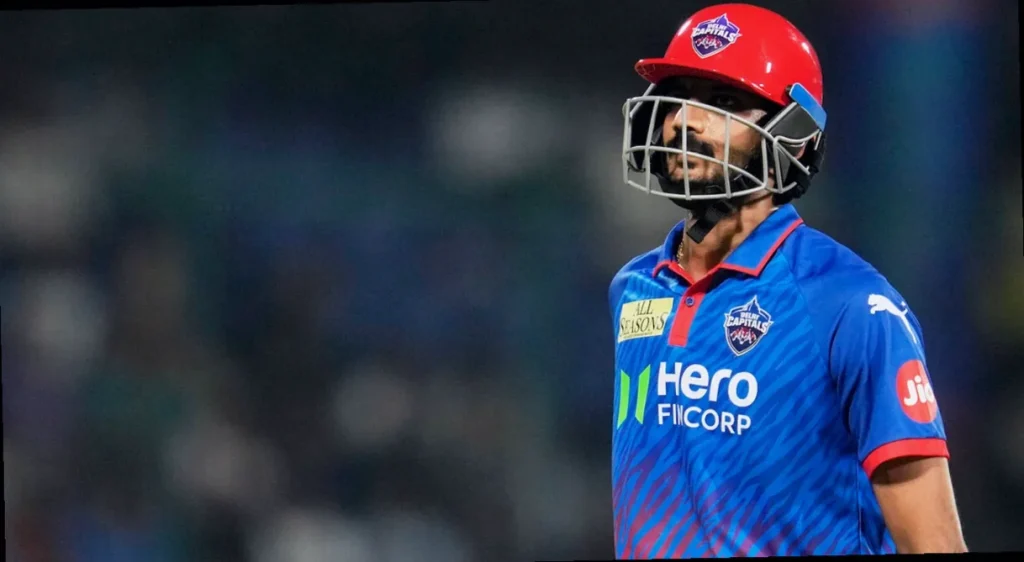
For Delhi Capitals (DC), the pattern has kept repeating—regardless of who leads the side or which players occupy the dressing room. For a fifth straight year, they finished outside the playoff bracket, and for a second consecutive season, the Badani–Axar Patel combination did not translate into a top-four position.
Key takeaways
- DC missed the playoffs for the fifth year running and finished sixth in IPL 2026.
- Hemang Badani said multiple close contests were lost due to missed chances at key moments.
- Delhi’s bowling unit managed only 64 wickets across 14 matches, the lowest joint total among all teams.
- Mitchell Starc played just six games for DC and was unavailable for their first nine matches.
- Axar Patel highlighted the importance of staying calm as captain, especially when frustration threatens decision-making.
- After IPL 2026, DC’s control structure is set to shift again, with JSW Sports taking over co-ownership for the next two seasons.
Badani on why DC fell short despite strong starts
Looking back on IPL 2026, DC ended up sixth despite beginning the season with two wins. Hemang Badani reflected that the campaign might have unfolded differently if the team had converted their opportunities when they came.
Speaking at the press conference after DC sealed their season with a victory over Kolkata Knight Riders (KKR), Badani pointed to several matches where the outcome could have swung the other way. He said there were games in which he genuinely believed DC had the chance to take control but failed to seize those pivotal moments.
Badani specifically cited the Gujarat Titans encounter, where DC lost by a single run. He also referenced the failure to defend 264 against Punjab Kings, describing it as another situation where the side would have tried to either capitalize or hold their ground. He added that with CSK, DC dropped catches, and against SRH, they also let go of chances at crucial times in the match.
Wicket drought and Starc’s limited availability
Beyond the points DC surrendered through those key moments, Badani stressed that the team’s lack of wickets throughout the season played a major role. Even after bowling out KKR on the way to a 40-run triumph on Sunday, DC still finished with 64 wickets from 14 games—joint-lowest in the tournament.
He noted that Mitchell Starc’s limited involvement compounded the issue. Starc appeared in only six matches, taking 11 wickets at an average of 20.36, meaning DC were without one of their primary wicket-taking threats for most of the campaign. At the same time, Badani felt the team could have made better use of the periods when Starc was not available.
Badani said DC’s ideal approach is to keep taking wickets to build sustained pressure. He suggested that the accumulation of factors—missed moments in tight contests, defensive lapses, and their overall inability to take wickets consistently—collectively explains why they ended with 14 points.
He added that Starc’s absence in the opening stretch, specifically the first nine games, did hamper their progress. However, Badani maintained that even without him, DC still had moments to turn things around and that qualification could have remained within reach. In his view, the tournament’s outcome often comes down to very small margins, and DC’s “what if” scenario largely stemmed from those fine lines.
Axar Patel’s message: keep fighting, stay composed
DC captain Axar Patel’s assessment broadly echoed Badani’s. While he acknowledged that DC were not consistently playing good cricket, he said the team kept battling, and he took pride in the fact that they won their final three matches even though qualification had already become impossible by then.
After the match, Axar said, “We were not playing well, but we kept fighting.” He added that the last three games showed a strong effort, culminating in the final match of the season.
Axar also discussed his own captaincy and the mental discipline required to avoid frustration when moments are missed—warning that frustration can trigger a domino effect and lead to poor choices. He noted that his batting output was also below his usual standards, averaging under 20, while he took only 11 wickets in 13 innings.
He explained that in a high-pressure tournament, it is crucial to look after both the group and yourself, with staying in the right mindset being the most important part. Axar said that by keeping calm and, if frustration rises, looking inward to correct his frame of mind, the team can make better decisions rather than acting out of irritation.
Soft reset ahead: ownership control changes, questions remain
The next IPL season will bring a soft reset for DC. Co-ownership control for two seasons is set to move from GMR Sports back to JSW Sports again. In the end, IPL 2026 once more became a season of “what ifs” for the franchise—faces and responsibilities may shift, but the recurring questions around DC’s consistency and ability to convert chances remain remarkably familiar.
