
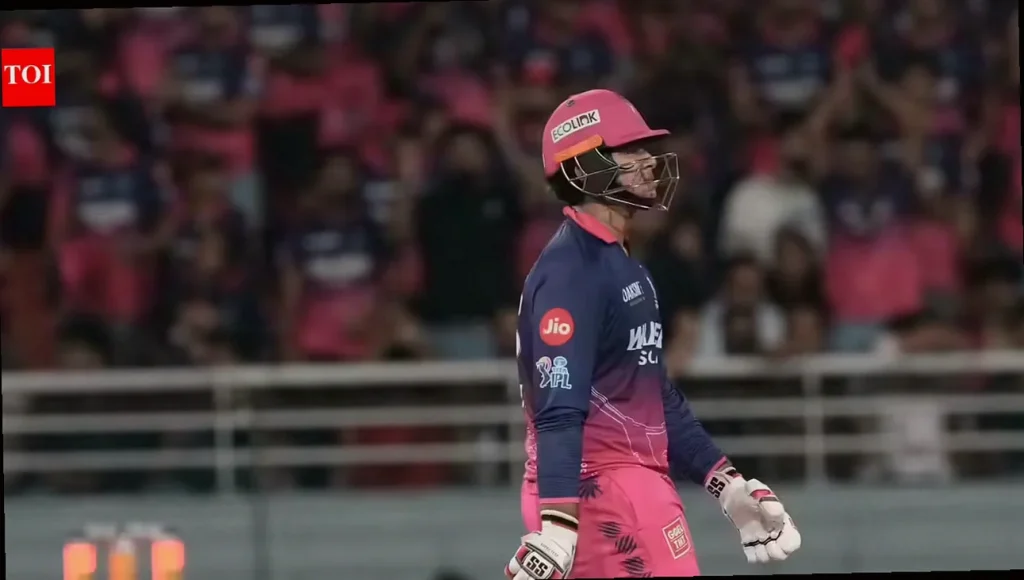
Kagiso Rabada believes Rajasthan Royals’ teenager Vaibhav Sooryavanshi has built an IPL 2026 campaign on fearless cricket, lightning-fast reactions and a knack for reading bowlers earlier than most players of his age. The Gujarat Titans pacer lavished praise on the 15-year-old after Qualifier 2 on Friday, a match where Sooryavanshi struck a brilliant 96 that ultimately couldn’t prevent GT from chasing 215 and winning by seven wickets, sealing a spot in the IPL 2026 final against Royal Challengers Bengaluru.
Qualifier 2: Sooryavanshi’s late surge and GT’s chase
Sooryavanshi once again grabbed the spotlight with a 47-ball knock of 96, following his blistering 97 in the Eliminator. His efforts still couldn’t stop Rajasthan from reaching 214/6, with him once more threatening to turn the game in his side’s favour. Rabada, however, was among the early bowlers applying pressure, and the teenager’s innings came to an end when he was dismissed by Rabada.
- Sooryavanshi scored 96 off 47 balls in Qualifier 2.
- Rajasthan finished on 214/6.
- GT chased 215 successfully and won by seven wickets.
- GT qualified for the IPL 2026 final against Royal Challengers Bengaluru.
- Sooryavanshi was dismissed by Rabada, narrowly missing a second consecutive century.
Season numbers: runs, leadership and the race for runs
The teenager finished the season with 776 runs, placing him at the top of the run-scoring charts for now. Rabada noted that while Sooryavanshi has set the benchmark at this stage, Shubman Gill still has the chance to surpass him in Sunday’s final.
- Sooryavanshi ended the IPL 2026 season with 776 runs.
- He currently leads the run-scoring charts.
- Shubman Gill can still overtake him in the final on Sunday.
Rabada’s take: maturity beyond age and Gujarat’s bowling choices
After the match, Rabada said Sooryavanshi continues to surprise observers with how composed and aggressive he is. He highlighted the batter’s quick hands, his ability to judge length early, and the energy he brings to the crease.
Rabada also argued that Sooryavanshi’s approach is precisely what fuels his run of performances. He stressed that the youngster’s fearless mindset—paired with natural instincts—has been central to his success this season, insisting that at this point age is no longer the talking point.
- Rabada praised Sooryavanshi’s fast hands and early length-reading.
- He said the teenager’s energy and fearless mindset drive his performances.
- Rabada believes Sooryavanshi’s game has already moved beyond age-based discussion.
How Gujarat tried to control Rajasthan
Rabada explained Gujarat’s thinking heading into the innings. The plan was to rely on their usual strengths and aim for early breakthroughs, and Rabada and Mohammed Siraj did deliver two early wickets. However, he felt Rajasthan then fought back, and GT didn’t execute as well as they would have liked—particularly by bowling too many short balls when they wanted to challenge the batters more upfront.
- Gujarat’s plan was to back their strengths and look for early wickets.
- Two early wickets did fall, but Rajasthan recovered.
- Rabada said GT missed the mark by bowling too many short balls.
“Still in control” despite Sooryavanshi’s counterattack
Even after Sooryavanshi’s counterpunch, Rabada felt GT never lost sight of the fact that they could still take wickets. He said the game was under control until the 19th over, despite Rajasthan getting away from them slightly.
- Rabada said GT never felt fully out of the contest.
- He felt the match was under control until the 19th over.
Rashid Khan’s role on a power-hitting surface
Rabada also acknowledged the difficulty Rashid Khan faced on a batting-friendly pitch. He felt that bowling spin against genuine power hitters is a tough assignment, and suggested GT probably believed a total around 180–190 was a defendable range—bar a dropped chance involving Sooryavanshi.
- Rabada said it was difficult for Rashid on the wicket against power hitters.
- He felt GT could have restricted Rajasthan to roughly 180–190.
- He pointed to a dropped catch involving Sooryavanshi as a key swing.
GT’s finish: Gill’s century, opening partnership and Rabada–Siraj impact
With the bat, Gujarat made their chase look comfortable, powered by captain Shubman Gill’s magnificent century and a 167-run opening stand with Sai Sudharsan. GT reached the target with eight balls remaining.
- Gill scored a century to anchor GT’s chase.
- Sai Sudharsan and Gill added 167 runs in the opening stand.
- GT completed the chase with eight balls to spare.
- Overall result: GT won by seven wickets in Qualifier 2.
Rabada and Siraj’s bowling partnership
Rabada further praised his bowling connection with Mohammed Siraj. He said the Indian pacer’s intensity and ability to build pressure have been crucial for Gujarat across the season. Rabada described how operating as a partnership—applying pressure from both ends—helps them create wicket-taking opportunities.
- Rabada credited Siraj’s intensity and pressure-building as key to GT’s season.
- He said their partnership involves coordinating pressure from both ends.
- Rabada added that bowling alongside Siraj increases the chances of taking wickets.
Rabada’s figures
In the match, Rabada finished with figures of 2/35 from his four overs, contributing to Gujarat’s early impact before Rajasthan responded through Sooryavanshi and a crucial partnership with Ravindra Jadeja, who ended unbeaten on 45.
- Rabada took 2/35 in his four overs.
- Ravindra Jadeja remained unbeaten on 45.
