
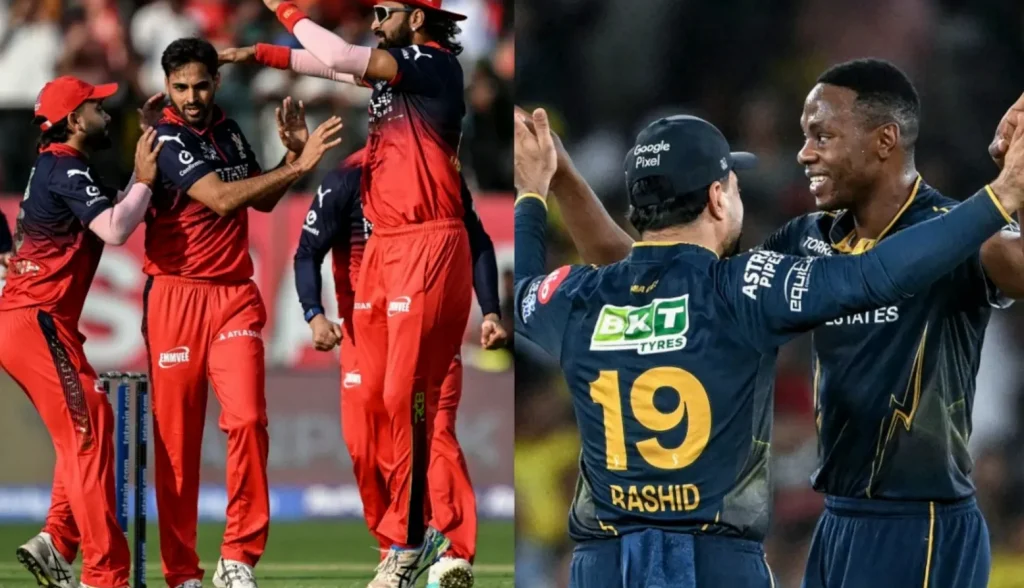
The IPL 2026 Final promises a high-stakes showdown between Royal Challengers Bengaluru and Gujarat Titans, with pace bowling looking like the key weapon in Ahmedabad. In a tournament that has leaned heavily toward batters and produced a record number of 200-plus totals, both finalists have stood out for their ability to strike with the ball. The summit match is also set to become a straight contest in the race for the Purple Cap, pitting Bhuvneshwar Kumar against Kagiso Rabada as the two leading wicket-takers go head-to-head.
Where and why the pacers could decide the final
The title decider is scheduled for Sunday at the Narendra Modi Stadium in Ahmedabad. With the track expected to offer something to fast bowlers, the side that applies pressure early—particularly in the opening overs—may hold the strongest advantage. That context makes the duel between Gujarat’s strike options and Bengaluru’s pace resources especially significant.
Bowling line-ups built for pace, pace, and more pace
Both teams can call upon attacks that blend youth with proven experience, giving them multiple ways to take wickets. For Gujarat Titans, Mohammed Siraj, Kagiso Rabada and Prasidh Krishna form a potent trio, with Jason Holder adding depth and firepower as an all-round option. Bengaluru, meanwhile, have leaned on the combination of Bhuvneshwar Kumar and Josh Hazlewood, while Rasikh Salam Dar has also developed into a reliable wicket-taking presence.
- GT’s pace group includes Mohammed Siraj, Kagiso Rabada, and Prasidh Krishna, supported by Jason Holder.
- RCB’s main fast-bowling core features Bhuvneshwar Kumar and Josh Hazlewood, with Rasikh Salam Dar as an additional wicket threat.
Purple Cap race: Rabada vs Bhuvneshwar
Rabada currently leads the wicket tally with 28 wickets, while Bhuvneshwar is close behind on 26. Siraj and Holder are also firmly in the hunt, sitting within the top group with 18 and 17 wickets respectively. Rasikh enjoyed a breakout run, finishing with 16 scalps, and even though Hazlewood is outside the top 20, his impact has been notable—especially during the Powerplay and the death overs.
- Kagiso Rabada: 28 wickets (leading the tally)
- Bhuvneshwar Kumar: 26 wickets
- Mohammed Siraj: 18 wickets
- Jason Holder: 17 wickets
- Rasikh Salam Dar: 16 wickets
- Josh Hazlewood: not in the top 20, but has shown wicket-taking promise in Powerplay and at the death
How the teams matched up before: Qualifier clues
When the two sides met in the Qualifier, Bengaluru’s pacers delivered the decisive edge. Jacob Duffy led the wicket haul with three strikes, while Rasikh Salam Dar and Bhuvneshwar Kumar each contributed two wickets, underlining how quickly the match can tilt when the fast bowlers find rhythm.
Momentum in the Powerplay: the big-game blueprint
Ahead of that Qualifier, former New Zealand pacer Simon Doull highlighted a simple but potentially decisive idea: the team that wins the Powerplay is likely to win the match. His belief was that both franchises have strong batting units and capable bowling attacks, but in a tight contest, early momentum can dictate the pressure points—especially with match-winners capable of changing the game over a handful of overs.
Doull’s reasoning can be applied directly to the final: if the openers manage to survive the first six overs with minimal damage and build towards a score in the 60-to-70 range, the opposition can be forced into reactive bowling and riskier tactics. In matches of this magnitude, early control often becomes the difference between setting a winning platform and chasing a moving target.
His comments framed the summit clash as a battle of forms and match-ups as well—one camp featuring Virat Kohli and the other led by Shubman Gill—both arriving in red-hot form. The underlying message remained the same: whoever gains the upper hand in the first phase of the innings sets the tone, and both teams are equipped to exploit it.
