
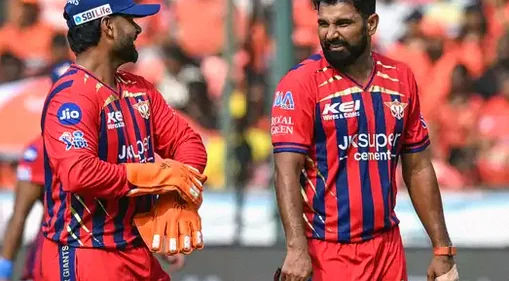
The SRH vs LSG clash carried plenty of storyline weight, but one thread stood out: Mohammed Shami’s return to a ground where he once endured his toughest T20 afternoon. Shami had been SRH’s second-highest buy at the 2025 mega auction, yet his spell in orange never truly clicked. In his last appearance here—on Pitch #2—he conceded 75 runs and recorded the most expensive spell of his T20 career, finishing with an outing that SRH would rather forget.
That backdrop sharpened the significance of this meeting, because Shami now lined up against SRH in a different jersey after an off-season trade. The SRH-LSG rivalry may still be in its early chapter, but Hyderabad has already helped it develop a clear flavour. In 2024, SRH tore apart an LSG target of 166, chasing down the number inside 10 overs, in a match remembered for the fallout as much as the cricket itself.
Quick facts
- Shami’s last T20 outing at this venue (Pitch #2) saw him concede 75 runs and suffer his priciest spell.
- SRH made Shami their second-most expensive signing at the 2025 mega auction.
- In 2024 at Hyderabad, SRH chased 166 inside 10 overs against LSG.
- In the following season’s meeting, Hyderabad pitches and SRH’s bowling plan limited LSG’s explosive batting.
- SRH have won eight of nine games when posting 200+ batting first.
- SRH’s record flips to two wins in 12 when defending scores below 200.
A year later, the same fixture had talk of a potential 300-plus total in IPL history, but disciplined bowling did the damage to LSG’s momentum. The pattern behind SRH’s home approach has been consistent: set par-plus totals, then turn the pressure screw through tight, defence-minded bowling. Their results underline it—when they bat first and reach 200 or more, SRH have been successful in eight of nine attempts. When they defend under 200, the numbers drop sharply, with only two wins from 12.
Hyderabad, and particularly Pitch #2, has often amplified that style. Runs have come quickly there, with a scoring rate above 11 per over, and totals of 240+ landing in six of 12 innings. For SRH’s aggressive top order, it has often acted like a springboard, making powerplay productivity a key ingredient in their overall game plan.
Shami’s Powerplay precision changes the equation
Against Travis Head, the intent from Shami was immediate: cut out width and force the opener to play within tighter boundaries. Early in the over, he pinned the batter with a sequence of narrow deliveries, then carried that same discipline forward to Abhishek. Just before the end of the set, field adjustments were made—slip moved to cover, and short third man crept in closer.
The payoff arrived on Abhishek. An off-cutter at 114.7 kph, pushed wide across him, produced the widest look of the over. Abhishek went for a drive, and the ball was taken cleanly at short third man—an out that was less about luck and more about a plan executed to the last detail.
In the second over, Shami changed the timing slightly with a quicker off-cutter at 121.5 kph, again aiming for a similar channel but with a shorter length. That adjustment baited Head into a half-committed drive on the first ball of the over. The contact was off-line enough to find a diving mid-off, and Head was removed.
Within 13 deliveries, the two batters who had earlier proved capable of dismantling LSG at this venue were sent back. For a bowler typically celebrated for his Powerplay impact, this was a meaningful twist in his usual script. Ball-by-ball tracking had not previously shown him striking with a cutter in this phase, but here he produced two wickets in just seven balls.
On a surface that didn’t behave exactly like its past versions, Powerplay ended up being the decisive factor. SRH’s early damage shifted the match to 22/3, while LSG sat at 53/1—leaving a 31-run cushion. Even with the chase reaching the nerve-jangling stages near the end, that early gap proved too much for LSG to erase, and Shami finished with his most economical four-over spell of the format, completing a sharp arc of redemption from his earlier costly visit.
