
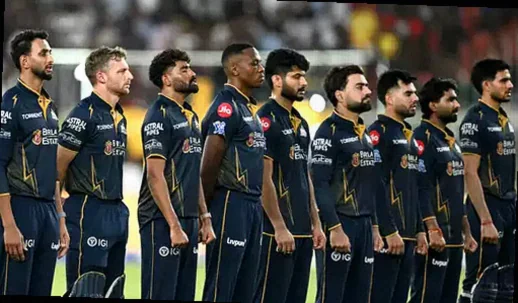
Gujarat Titans had to crisscross three different cities and squeeze three matches into a six-day window, even arriving in Ahmedabad less than a day before the IPL final. Yet head coach Vikram Solanki made it clear that travel and scheduling disruptions would not be used as a reason for the defeat to Royal Challengers Bengaluru on Sunday. RCB ultimately won by five wickets to lift their second IPL title, and Solanki insisted the outcome was simply about who played better on the day.
Travel overload, but no excuses
Solanki acknowledged the logistical strain surrounding the final, noting that GT played Qualifier 1 in Dharamshala on May 26, moved to Chandigarh the next day, and then returned to the field for Qualifier 2 on May 29. The Titans reached Ahmedabad at around 10:00 pm on Saturday after their flight from Chandigarh was delayed by torrential rain and storms that affected northern India in recent days.
Despite the disruption, Solanki refused to shift the blame. He said they could not control the weather and that if late landing was forced by conditions, there was no alternative. He added that GT did get moments to test RCB but were not good enough overall in the final, framing the result as straightforward rather than something to rationalise away.
Batting-order shuffle and the call behind it
A key talking point from the final was GT’s batting-order reshuffle. Solanki suggested that coach Ashish Nehra was behind the decision to move Nishant Sindhu up to No. 3, a spot where Jos Buttler had batted throughout the season with notable success.
Buttler’s season numbers were substantial—he struck 526 runs during the campaign—but he was promoted to No. 4 for the final after being held back from the No. 3 role. Solanki said the adjustment was a judgement call made by Nehra and implied it was not heavily debated in the team meeting.
He explained that Nehra made the call to send Buttler in at No. 3 earlier in the tournament, and that the coaching staff and captain work together on these decisions when the captain is available.
- Solanki said the move to the No. 3 spot was a “judgement call” involving Nehra.
- He added the team did not really discuss the specific reshuffle at the meeting stage.
- He indicated Nehra makes such calls occasionally in coordination with the captain when present.
Solanki also hinted that the late nature of the call may have caught Shubman Gill unaware. He noted that Gill was out in the middle when the decision had to be taken, with Sindhu walking in only after Gill’s dismissal. Sindhu then made 20 off 18 balls.
With Buttler positioned at No. 4, he managed 19 from 23 deliveries before being dismissed, leaving GT to build a chase from a score of 73 at the time of his fall.
Pitch reading, totals, and RCB’s chase
GT’s team director admitted that they misjudged the pitch. He felt it was not a surface that would reliably produce a score in the 200-plus range, and suggested that a total closer to the 180 mark would have made RCB’s chase more demanding.
From the start, GT’s batters went on the offensive, but wickets fell at regular intervals. The Titans eventually finished on 155 for eight, a total RCB chased comfortably.
Virat Kohli played the central role in the successful chase, remaining unbeaten on 75 as RCB reached the target and sealed the win to claim their second IPL title.
- GT finished with 155/8 after losing wickets regularly despite aggressive intent.
- RCB chased the target comfortably with Virat Kohli scoring 75*.
- GT’s leadership conceded they likely set a slightly high expectation for what the pitch would allow.
Solanki on Kohli, dependence on top order, and credit to RCB
Asked about Kohli’s innings, Solanki said he was unable to properly applaud it because it came at GT’s expense. He praised Kohli as an exceptional player and acknowledged that Kohli’s innings almost anchored the chase and guided it in the way it unfolded.
On GT’s reliance on their top three—Sai Sudharsan, Shubman Gill and Jos Buttler—Solanki was asked whether the team had become too dependent on them. He responded by pointing out that the team had simply played a final, and that the discussion about overdependence should be viewed in light of their overall season output, including the number of runs scored by the batters involved.
He referenced the fact that both openers had surpassed 700 runs during the season and argued that the campaign should be assessed by the results and statistics rather than a single match narrative.
Solanki also offered congratulations to RCB for their championship run. He said RCB had produced an outstanding league-stage campaign, finished at the top of the table, and then beat GT twice, underlining that GT had to accept that reality.
While he expressed pride in what GT achieved as a group, he also said they would have wanted to go one step further. He added that many other teams would have gladly taken GT’s place in this position.
- Solanki praised Kohli’s 75* while noting the innings belonged to RCB in a losing cause for GT.
- He defended the top-order core, saying a final has already been played and the broader season numbers speak for themselves.
- He congratulated RCB for winning the title after finishing first in the league stage and beating GT twice.
- He maintained GT’s campaign was still something the franchise could be proud of, even if they fell short of the ultimate goal.
